Georgia Peaches
Variety on Augusta's Par Fives

It’s that time of year again. The azaleas in bloom, Magnolia Lane in all its pomp and what feels like the start of the real golfing season across the US (Ireland has already had it with the West of Ireland in County Sligo). Many look to Augusta in its prim and proper presentation. Not a blade of grass out of place, fast greens, etc. etc. Mackenzie, But this is to do an injustice to what makes Augusta really great.
Though much of the layout has changed over the decades, and there are some that may wish to harken back closer to the original draft, the overall bones present something that many inland courses should strive to replicate - architectural design features and the great use of land.
When we speak of variety on a course, we invariably speak of par threes. Most courses have four, and our perception of these is that no two should be alike, different in orientation, length and type of challenge presented. This is somewhat the case at Augusta, but greater variety is offered in the holes most pro’s will look to pick up scores on - the par fives.
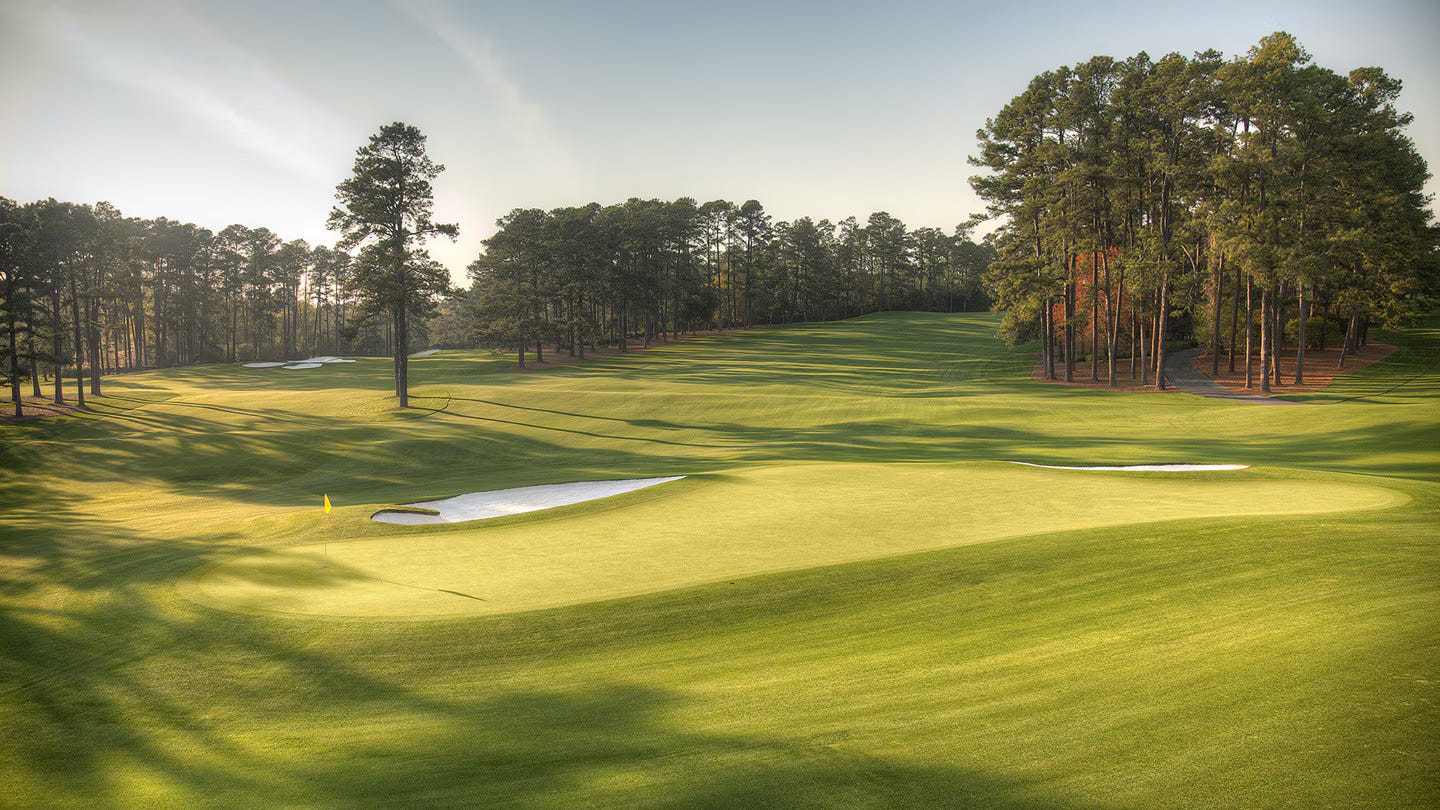
Pink Dogwood is the first example of this. You will hear on commentary ad infinitum of how undulating the property is, and the second hole sets the tone for this. A sheer drop of some hundred feet from tee to green means, on paper at least, players can get home in two despite it being close to 600 yards. The main strategy of the hole is dictated by the position of the pin, on a green that lies shallow and almost perpendicular to the fairway, guarded by a bunker either side at the front, which slopes severely from left to right.
The best analogy of how this hole plays off the tee is to compare it to ski jumping. In this, there is a fine margin in building up as much speed as possible so as to successfully land after your jump. Hitting downhill does mean you can hit the ball farther, by having it roll out further. But with no long grass, there is no barrier to stop you of going further into the tree line and turning a possible four into bogeys or worse. These holes aren’t designed to be penal per se. The punishment here comes in the form of not getting a birdie or better, as inevitably a player will bogey a hole later in the round. Memorably, Louis Oosthuizen scored an albatross here during the 2011 edition before fellow South African Charles Schwartzel took advantage of Rory’s mishaps to win his green jacket.
Yellow Jasmine is the eight hole of the first nine and takes the opposite approach. The tee shot goes significantly uphill, and the hole possesses only one bunker on the right side of the fairway. This though is the key to the strategy of the hole. It exists on the line of charm, a theory so engrained and integral to Golden Age architecture. The bunker exists to entice the player, rather than to purely punish them. By all means, they can veer left to play it safe, but akin to what we see at Sawgrass, this dictates either a lay-up or being forced to hit a sweeping draw around the tree line that may not hold the green.
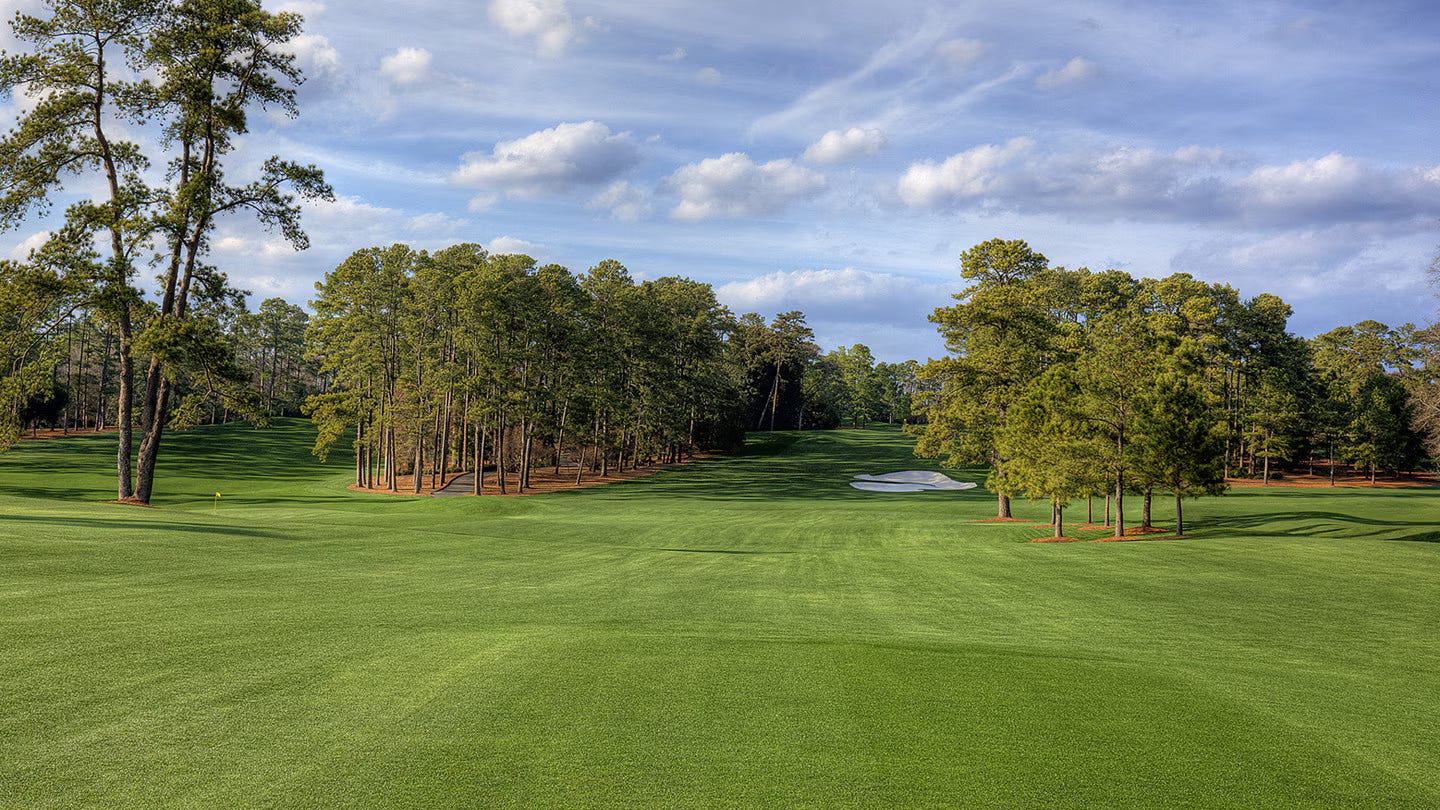
An underrated feature of this hole is the fairway’s slope. More often than not, Tour players play off perfectly flat lies, enabling aggressive play. The uphill lies on this hole add extra demand on the spin imparted on the ball. Like the majority of Augusta greens, the safest miss is the short one, as it grants you a pitch up the slope. Many may either see a short third shot suck back off it, or hit past the hole and leave themselves a tough downhill putt that they cannot take any risks on.
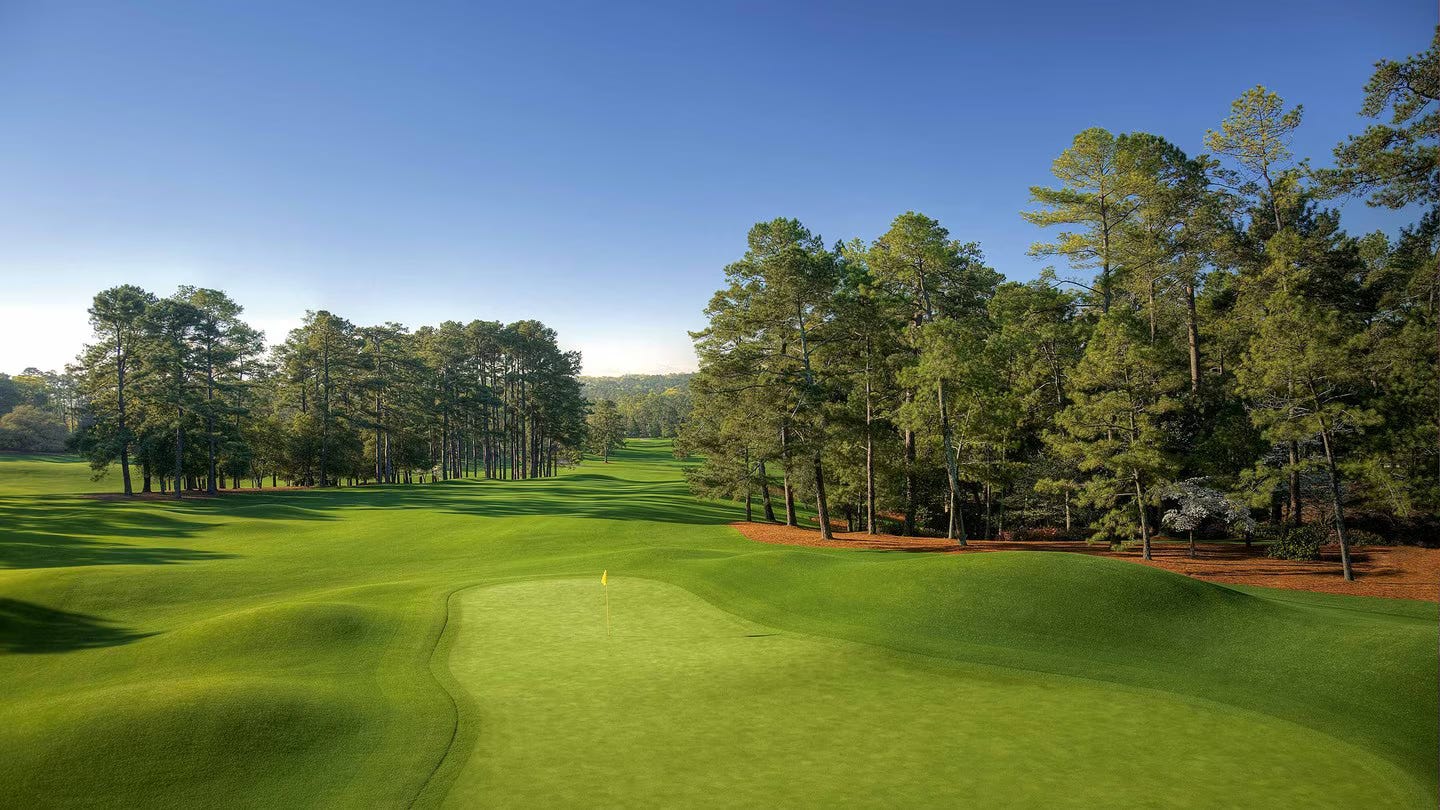
A series of mounds, lightly grassed, flank either side of a green that slopes pretty hard back to front. There is much more room out to the right of the green, but short siding becomes an issue. Much like The Open on tight, firm links land, the run-off areas of Augusta act as a better differentiator of short game skill than heavy rough. “Impossible shots from perfect lies” as revered golf mind Michael Clayton would put it.
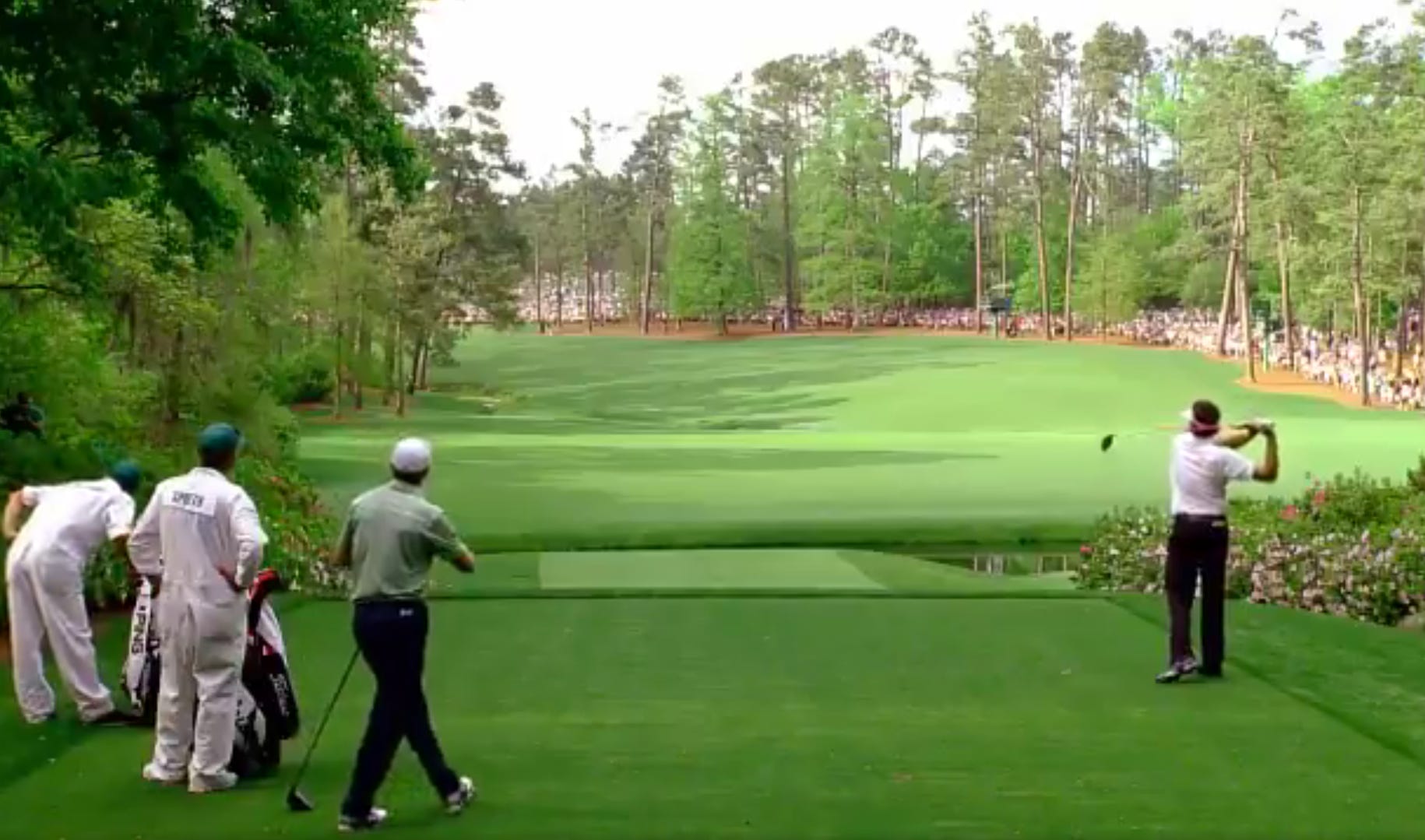
What is there to say about the fabled thirteenth that hasn’t already been said. US Open winner Geoff Ogilvy writes some beautiful takes on it for Fried Egg that I simply can’t top, so give them all the credit they deserve. It is often described as the “ideal hole” rather than the best or perfect hole. Remember - Golden Age architects wanted to bring back a spirit of adventure to the game, allowing you to plot your own way (relatively speaking) across some holes. To engage the strategic merit of them.
In many ways, this is similar to a Cape design - you try to bite off more of the hole from the tee to seek the reward of a shorter or better angle at the green. Rather than cutting the corner as you would traditionally see, owing to trees on the left, it is the use of the fairway camber that replaces this. In my opinion, this is the single best way to make courses both interesting and playable for all levels. Take Faldo and Norman in 1996 for example.
You can try and shorten the hole by playing along the left edge. Not only does this grant you a shorter route home, it also gives you the flattest lie for your shot into the green, off the best angle. The issue is trying to skirt it as close to the stream that runs along the inside of the fairway. If you’re not brave enough for this, feel free to play safe up the right. This leaves an extremely awkward lie for the orientation of the green, as the ball is perched above your feet, thus increasing the chances of the ball going hard left on the player.
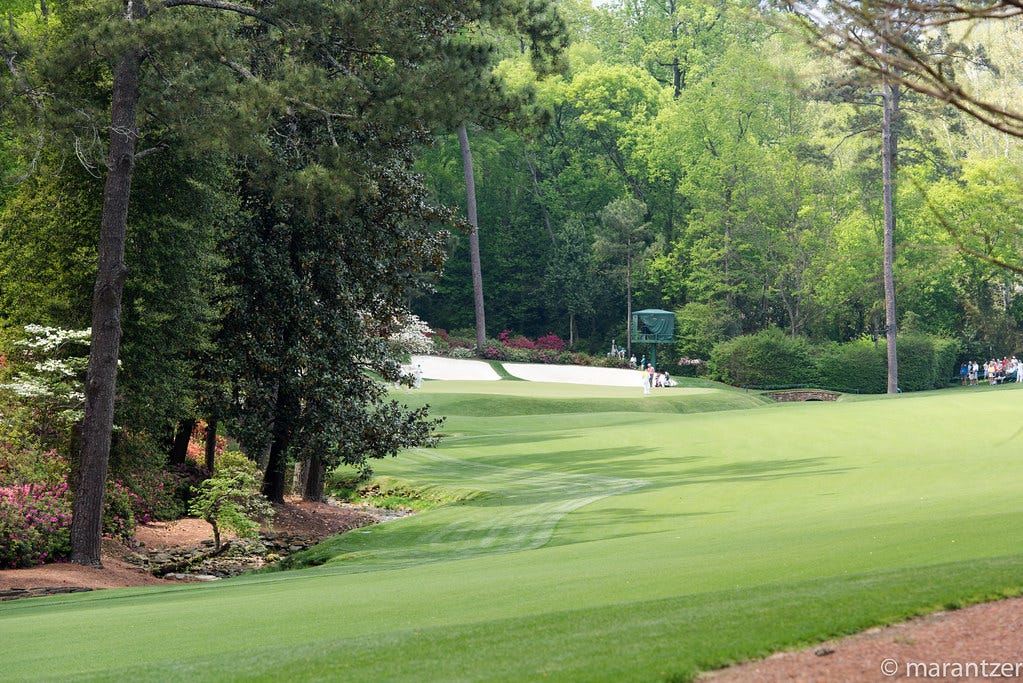
Like many great holes, it is complex in its simplicity. There are not many hazards to speak of, bar the stream and bunkers at the back of the green. Sadly, in recent years the hole has succumbed to advances that take away the original intentions that Mackenzie and Jones had. After Tigers win in 1997, the course set about toughening itself up to defend from low scores. Trees were brought in on the right horizon line of the fairway to tighten and effectively force players into execution off the tee. This wouldn’t be effective on its own, as modern equipment, predominantly the ball, has meant greater distances and stopping power for the players, taking away a lot of consequences for them.
Lastly, Fifteen is a straight-away par five that yields the round’s final real scoring opportunity (bar the Sunday pin on sixteen). I stand to be corrected here, but historically it’s been more of an execution test than real strategy but what a test it is. It’s the site of “The Shot Heard Around the World” in Gene Sarazen’s albatross two in 1935 that helped bring him to a play-off and victory the following day. Incidentally, two’s have been recorded in competition on all the Par Fives at Augusta National.
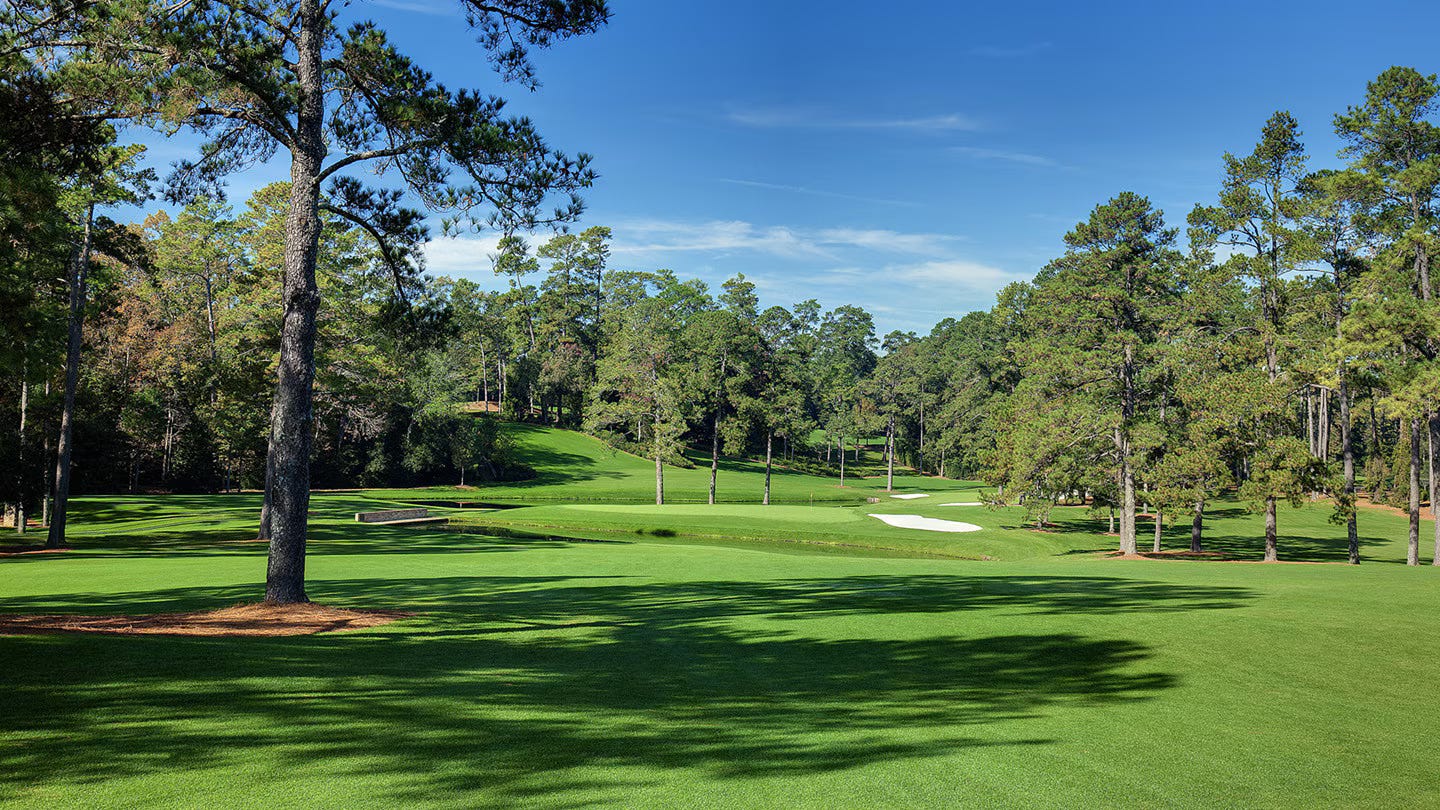
On the flip side of this, it’s a hole that can rack up big numbers. Sergio Garcia carded a 13 in the year following his ascension to Augusta’s fabled pantheon of greatness. The issue is less off the tee and more to do with the treachery of the green site. Provided they have kept the ball down the right half of the fairway, presenting them an unobstructed view. Here, more often than not, the decision to go for it is made for you. This has, like the others featured, been somewhat neutered by modern technology. But players are still only human and can succumb to the pressures, internal and external, of the tournament.
Steep banking from the front gives way to a small pond, and with the ability players and equipment have to impart spin on the ball, it is a regularity that balls will fizz off the front edge and into the water with wedges. There is a large ridge that bisects the green, placing the traditional Sunday pin on the lower level.
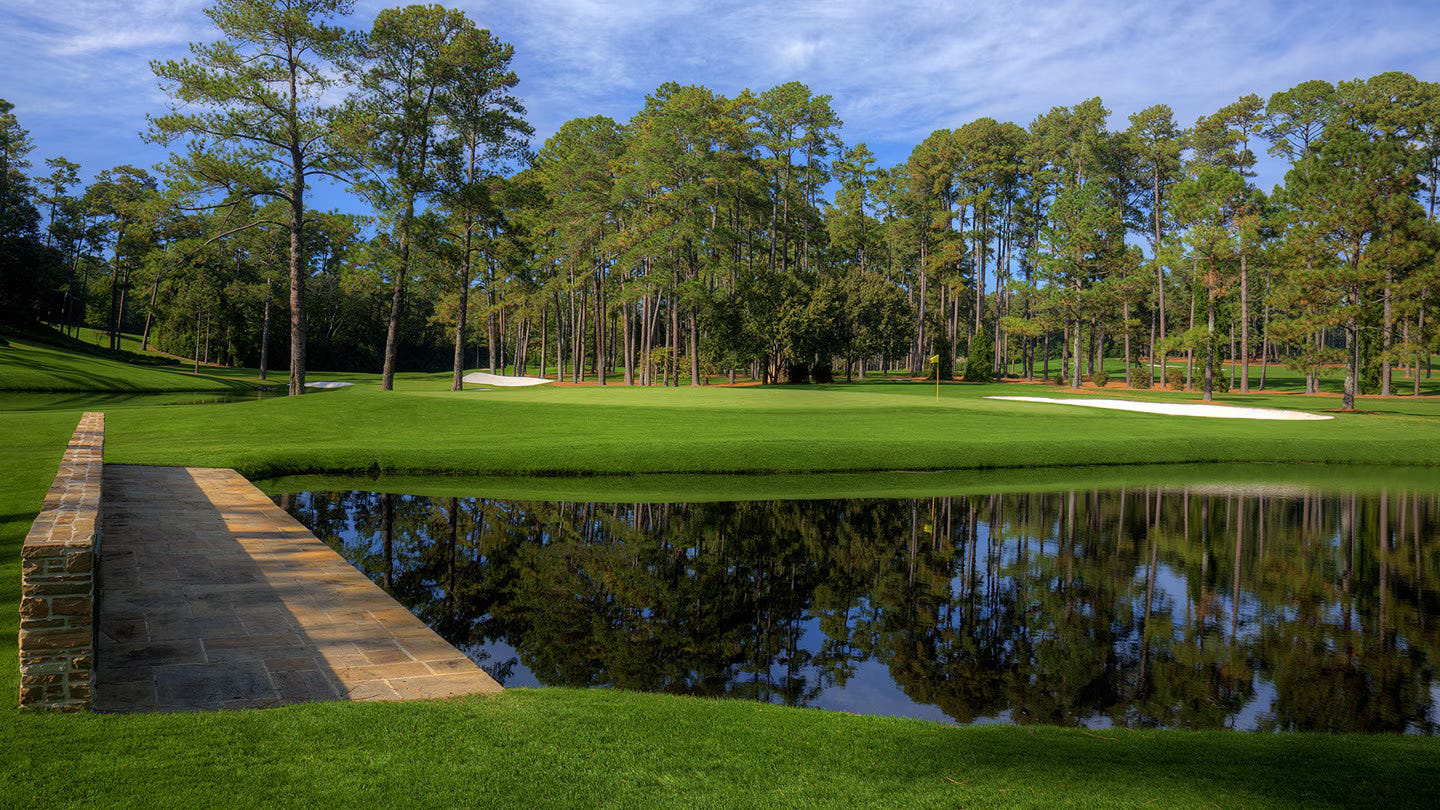
There are many opinions on the current presentation of Augusta National. Some would prefer to see it return to its original, more rustic version. Others prefer the pristine green baize that currently greets us. Though we all have our opinions, it is crucially important to note the legacy that Dr. Mackenzie and Bobby Jones have left us. The skeleton of this old lady is certainly one that should be studied in great detail, as there is something, however big or small, to be taken away from it.
As to who wins this week, let’s just say that they will have to make hay on these particular holes, as it presents plenty of opportunities later to flummox the best in the world. Here’s hoping it’s extra firm and fiery!
So insightful. Love August!