Broken Grounds
How Segregating Fairways Can Be Interesting

This week's Players Championship served up a cracker until the very end. As we saw, Scottie emerged victorious over a chasing pack that included Schauffele, Clark and Brian Harman, being the first to successfully defend their title here.
The inclusion of Harman on the list of those just missing out is notable. Past winners like Martin Kaymer, Matt Kuchar, and Cam Smith would be notable as not the longest of hitters. In Dye’s design here, he allows all aspects of the game to be tested with more equal reverence. How?
A fantastic example of this architecturally is the ninth hole. It’s not the longest par five that Tour players will face all year, but there is enough in it to trouble the best. The fairway is intersected by water that goes across it at an angle. This initially prevents players from bombing it as far as possible, especially the longer player, and not having to worry about the consequences.
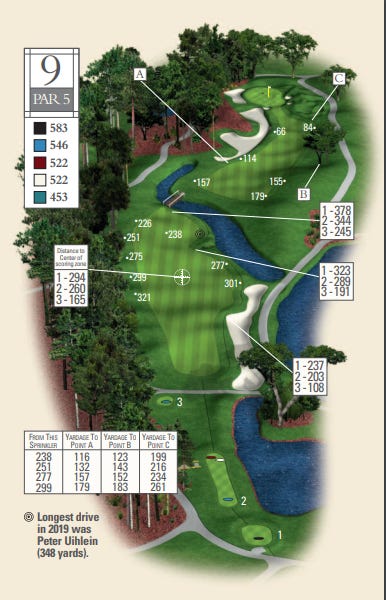
The trouble comes in the decision on the second shot: whether to go for a small green surrounded by mean moguls with heavier long grass, and characteristic Dye mini bunkers or lay up to a number on the fairway. Ordinarily, per data, you hit as close as possible to leave yourself as short a chip as possible, but here that can sometimes not be the case. A long drive up the left half leaves you a shorter distance in, but you are blocked out by trees on that angle (coverage showed that the majority were fifty feet high).
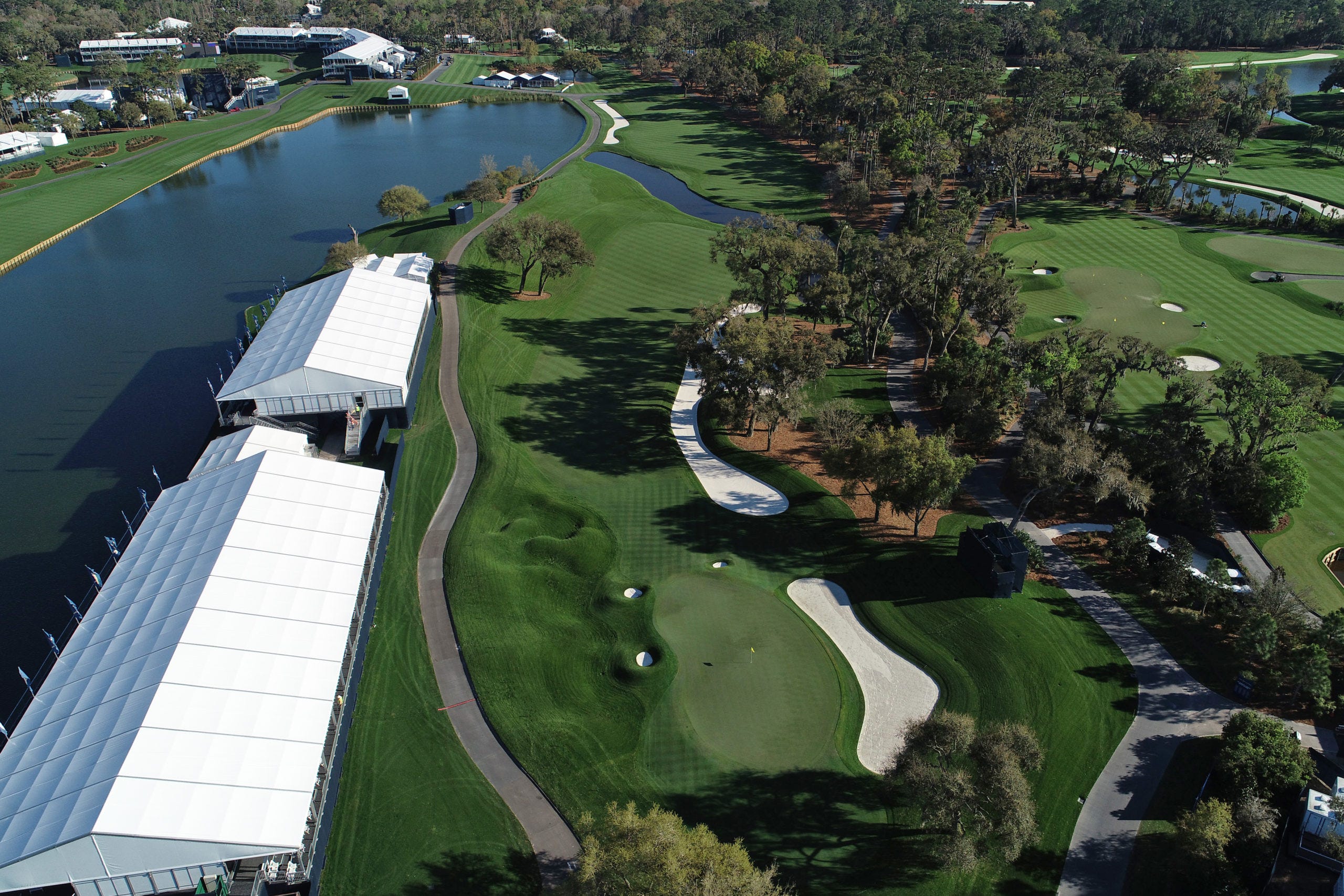
We have two players. Player A hits long up the fairway's left half to this spot and has a 230 shot to a back left pin. Player B gets the right half line and has 260 remaining. If Player A is to get home safely, he has two choices: draw the ball sufficiently around the tree line and risk short-siding himself, or try and hit high over the trees, leaving less margin for error in the quality of their intended strike. Player B still has tough choices to make, but because he has positioned himself on the better angle, he has given himself more options that benefit his scoring potential.
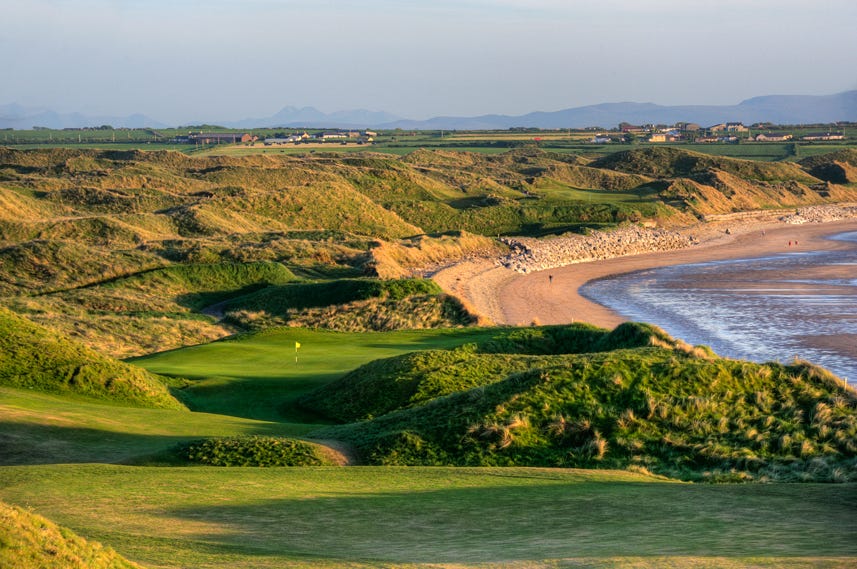
A similar example, given modern technology is found in Ballybunion. The eleventh, dubbed Watsons, is a tough par four along the ocean. There is a significant difference in the length of the hole as you go from members (white) tees to championship (blue) tees but a greater dilemma exists for longer players off the members tees. From 230 yards off the tee, there is a significant drop in elevation on the fairway, not visible from the tee. It goes down in step-like fashion and gives the player a decision to make off the tee (normally, it plays into the prevailing wind but for my point, let’s say it’s flat calm). Stay up top and have a view of the green, or go down the bottom and hit blind?
Drone Footage Of Eleven Ballybunion
By all means, hit a driver here to gain you the yardage you seek, but this will come at the expense of significant advantages to scoring. Tom Simpson changed very little of this hole, but does mention in his report of “suppressio veri”, meaning the longest way round is the shortest and best way to the green. Simpson, like many Golden Age architects, wished to reward the use of intelligent play, rather than forcing simply a test of execution or how far you can hit your ball.

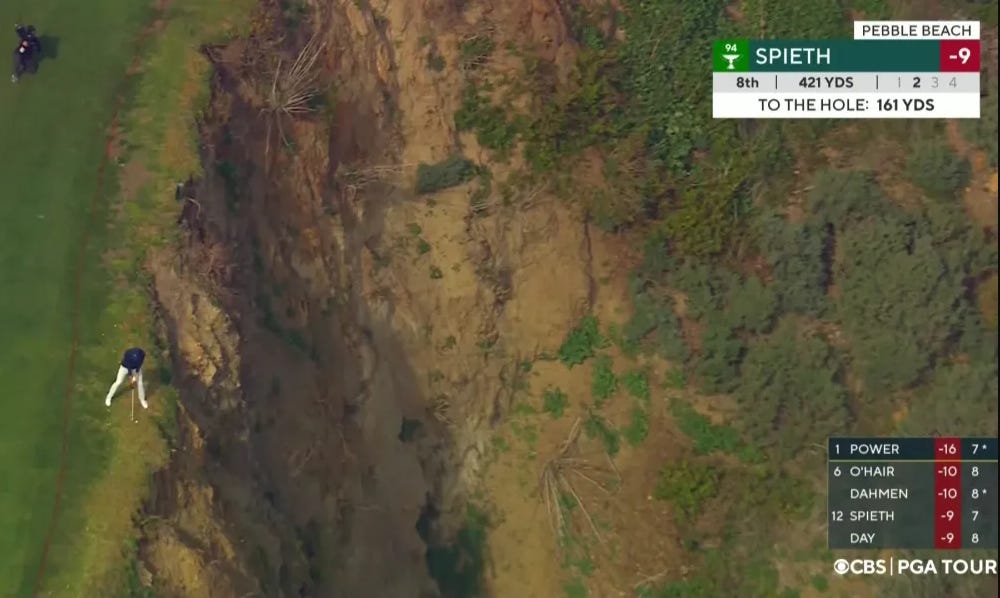
The last example I use for this broken fairway concept is far less man-made, but more a great use of existing land features. Pebble Beach is iconic for many reasons. The stretch of golf along the coast in particular is praised as “the greatest meeting of land and sea in the world” and though the seventh hole garnishes so many of the plaudits, what follows is equally, if not more, exhilarating.

A relatively short tee shot by any standards, let alone the Tour, sees players hit to the top of the hill, where one can go no further. A yawing chasm exists at the end of this stretch of fairway. Simply, there is no bombing this as far as possible. A steep, terrifying cliff gives way to the azure of the Pacific, and doesn’t reform into terra firma until extremely close to the green. Just ask Jordan Spieth, who Players usually have a 170 yard distance from a very elevated vantage point and like Ballybunion, are left at the mercy of the coastal winds as to how and what to play. The skillset is tested by having to hit shots that ride or fly under the wind, and stop on a small green (recently extended but still small by most standards).
Whether you agree or disagree with my opinions on the ball debate, this is a delicious way to provide more interesting tests in golf for the weekend warrior and Tour Pro alike. I’m sure I missed out on many more, so feel free to inform me of others that merit mentioning.
INCREDIBLE piece. So knowledgeable about golf architecture!